Posts

CCARDESA holds inaugural media awards

  The Centre for Coordination of Agricultural Research and Development in Southern Africa (CCARDESA), has held its inaugural media awards with a call for journalists in the southern African region to take the lead in disseminating climate smart agriculture (CSA) information in order to help tackle the problem of climate change. According to CCARDESA, climate change has been identified as a major threat that is affecting the SADC region including the agricultural sector which relies heavily on rain-fed agriculture.  Gabriel Masvora of Zimbabwe emerged winner of the awards which were introduced this year, while Gloria Siwisha of the National Agricultural Information Services (NAIS) in Zambia, and Dickson Mmaba of Botswana emerged first and second runners up respectively. Botswana’s Minister of Agricultural Development and Food Security Karabo Gare announced the winners of the inaugural awards during CCARDESA’s 10 th anniversary commemoration last Friday. Mr Gare congratul...

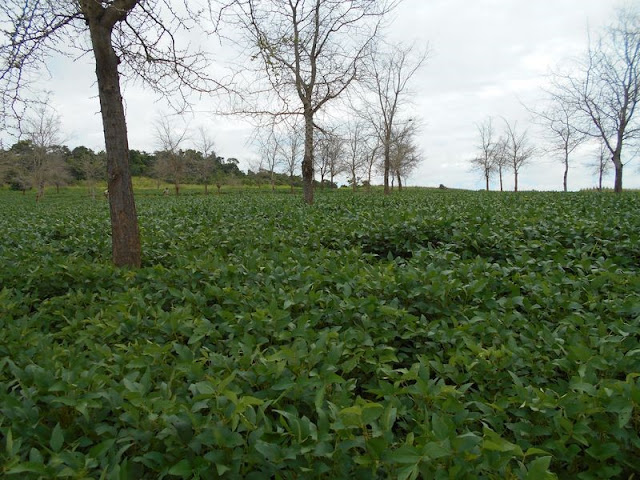
Chipata trades ventures into winter maize production

Image
Dilika Ward Councillor Samuel Phiri (Left), and Chipata District Administrative Officer Kapembwa Sikazwe (Second from Left), listen to a seed company representative as he explains the benefits of winter maize production during the field day - Picture By GLORIA SIWISHA By GLORIA SIWISHA HAVING a strong agricultural production unit doesn’t just ease the teaching of practical subjects like agriculture; it also helps skills training colleges to contribute significantly to national food security. Colleges that embrace agriculture in its broadest sense, also remain self-reliant since they are able to generate income from the sale of agro-produce. With this realization, Chipata Trades Training Institute (CTTI) has ventured into winter maize production. In June this year, the institute planted vitamin A orange maize on a one Lima field through irrigation farming and expects to harvest between 9,000 and 11,000 fresh cobs of maize this October. This is because it employed conservation ag...

Climate smart agriculture impacting farmers' lives

Image
  By Gloria Siwisha CLIMATE change is a concern in Sub-Saharan Africa because of its adverse impact on the environment. In Zambia, climate induced hazards such as increase in frequency and severity of seasonal droughts, occasional dry spells, increased temperatures in valleys, flash floods and changes in the growing season, always have a direct impact on farmers’ lives with unforeseen consequences on food, nutrition status, and incomes. For these reasons, the Zambian government, working with collaborating partners, is integrating climate change concerns into its agriculture policy agenda. Under its Zambia climate smart agriculture (CSA) strategy framework, the government is promoting the roll-out of CSA practices that will sustainably increase productivity, enhance resilience of farmers towards climate related effects, and reduce or remove greenhouse gas (GHG) emissions (CSAIP/World Bank, 2019). Conservation agriculture (CA) and agroforestry, are the most w...

APPSA builds capacities of smallholders in groundnut seed production

Image
  By Gloria Siwisha GROUNDNUTS are one of the most important crops grown in the Eastern province of Zambia. According to Chapoto and Zulu-Mbata (2015), nearly two-thirds of households in the region produce groundnuts as both a food crop and source of income. In the last two decades however, smallholder farmers in the country have experienced a decline in groundnuts production and productivity. During the 2011/2012 agricultural season for instance, the total quantity of shelled groundnuts produced by smallholders significantly reduced to 113,000 metric tonnes from about 160,000 metric tonnes recorded in the 2009/2010 agricultural season (IAPRI, 2013). Groundnut yields also remained low, ranging between 0.5 and 0.7 metric tonnes per hectare, compared to the global averages of around 1.7 metric tonnes. Experts in the region, attribute the low productivity levels to inappropriate farming practices, seed recycling, pests and diseases, as well as climate variability. ...

Scribes urged to communicate agricultural information effectively

Image
Participants discuss the importance of effective communication - Picture By Bright Sakala By Gloria Siwisha, Notulu Tembo and Mary Mweemba Lusaka, 10 July, 2020………DESPITE the huge potential that Zambia’s agricultural sector has in food production, it continues to face challenges of low productivity per unit area especially among smallholder farmers. According to a 2019 Food and Agriculture Organisation (FAO) baseline survey report, yields for maize were currently around 1 to 1.5 tons per hectare against the potential of 5 to 8 tons per hectare. Low crop yield trends also hold for grain legumes whose yields are said to be stagnantly at 0.7 tons per hectare against a potential of 2.3 tons per hectare. Experts say that one of the reasons for the status quo is that specific information needed by smallholder farmers to increase yields is not packaged nor disseminated effectively. In view of this, the Sustainable Intensification of Smallholder Farming Systems (SIFAZ) project in Zambia conven...

SIFAZ improving sustainable, climate-smart crop production

Image
By GLORIA SIWISHA THE agricultural sector is important for Zambia for many reasons. It is considered to be the backbone of the economy as it provides food and raw material for domestic industry and also employment opportunities to a very large proportion of the population. According to the Seventh National Development Plan (7NDP), the agricultural sector is crucial for achieving diversification, economic growth and poverty reduction in Zambia. However, the sector has been with its challenges. Experts argue that the crops sub-sector in particular faces challenges of low productivity propelled by a number of factors. Sibajene Mudenda, a researcher at the Zambia Agricultural Research Institute (ZARI)  Mount Makulu Research Station, said recently during a meeting with Ministry of Agriculture staff in Eastern Province that the factors attributed to the low and declining productivity of smallholder farmers in Zambia are inadequate farming practices; decreasing soil fertility and la...

Rosette virus disease and its threat on smallholder productivity

Image
By GLORIA SIWISHA, Chipata AN epidemic of groundnut rosette disease threatens to drastically reduce the 2019/2020 groundnut yield in the Eastern Province of Zambia. Preliminary data obtained from the Zambia Agriculture Research Institute ZARI’s Msekera research station in Chipata, shows that the most severely affected smallholder groundnut fields are those in Chipata, Kasenengwa, Chipangali, Katete, and Petauke districts. As an off-shoot of weather related risks like late on-set of rains, droughts and dry-spells, groundnut rosette disease is said to be the most devastating virus disease of groundnuts in Sub-Saharan Africa with the potential to cripple rural economies. Research has shown that rosette virus disease can reduce groundnut yields by 70 to 90 percent. According to Yayock et al. 1976, an epidemic in northern Nigeria in 1975 destroyed approximately 0.7 million hectares of groundnuts, with an estimated loss of US$ 250 million. Similarly, an epidemic in eastern Zambia in 1995 af...